


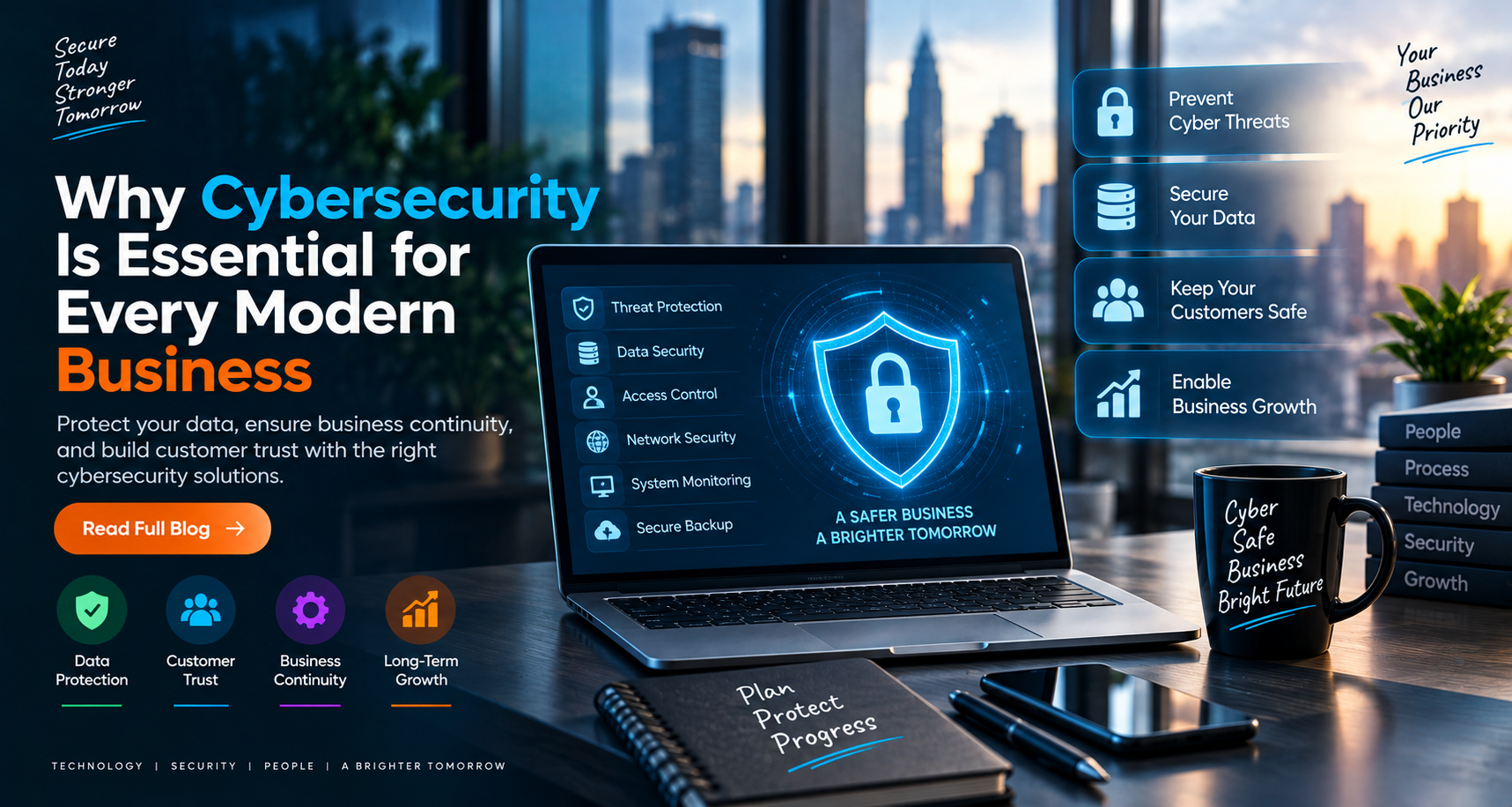
Protect your business, secure your valuable data, and build lasting customer trust with the right cybersecurity practices and digital solutions.
As businesses increasingly depend on websites, cloud platforms, online transactions, and digital communication, cybersecurity has become a critical part of everyday operations. From customer information and financial records to internal documents and business applications, organizations handle a growing amount of sensitive data.
Without proper protection, businesses may face data breaches, unauthorized access, service disruptions, and financial losses. A strong cybersecurity strategy helps reduce these risks and creates a safer environment for business growth.
1. Protect Your Valuable Business Data
Every business stores important information, including customer details, employee records, financial documents, product information, and operational data. Protecting this information is essential for maintaining business continuity and customer confidence.
Security measures such as access controls, encryption, secure storage, and regular backups can help businesses protect their data from unauthorized access and unexpected loss.
2. Reduce the Risk of Cyberattacks
Cyber threats can affect businesses of all sizes. Phishing emails, malware, weak passwords, and unauthorized access are common security concerns that may disrupt daily operations.
Businesses can reduce their exposure to these risks by using strong passwords, enabling multi-factor authentication, keeping software updated, and training employees to recognize suspicious activity.
A proactive approach to security is often more effective than waiting for a serious incident to occur.
3. Build Customer Trust and Confidence
Customers expect businesses to handle their personal and payment information responsibly. A security incident can damage a company’s reputation and make customers hesitant to continue using its services.
By implementing appropriate security practices and communicating clearly about data protection, businesses can demonstrate their commitment to customer privacy and reliability.
Trust is an important foundation for long-term customer relationships.
4. Secure Websites and Online Platforms
A business website is often the first point of contact between a brand and its customers. If the website is poorly protected, attackers may exploit vulnerabilities, access sensitive information, or disrupt its functionality.
Businesses should consider essential security practices such as:
- Using HTTPS and valid SSL/TLS certificates
- Keeping website software and plugins updated
- Protecting administrator accounts
- Performing regular security checks
- Maintaining reliable backups
- Applying secure development practices
A secure website helps create a safer and more dependable online experience.
5. Strengthen Cloud and Remote Work Security
Cloud services and remote work tools allow employees to access business resources from different locations. However, convenient access must be balanced with appropriate security controls.
Businesses should manage user permissions carefully, protect devices, monitor account activity, and ensure that employees only have access to the information they need.
Secure cloud configurations and responsible access management can help reduce unnecessary security risks.
6. Prepare for Security Incidents
Even with strong security measures, no business can eliminate every possible cyber threat. Having an incident response plan can help organizations respond more effectively when something goes wrong.
A practical plan should identify:
- Who is responsible for handling security incidents
- How suspicious activity should be reported
- How affected systems can be isolated
- How data and services can be restored
- How customers and relevant stakeholders should be informed
Preparation can reduce confusion and help businesses recover more efficiently.
7. Keep Employees Informed and Aware
Employees play an important role in maintaining cybersecurity. Even a sophisticated security system can be weakened by unsafe practices, such as clicking suspicious links or sharing login credentials.
Regular training can help employees recognize phishing attempts, use secure passwords, protect company devices, and report unusual activity promptly.
Creating a culture of security awareness benefits the entire organization.
8. Make Security Part of Your Business Strategy
Cybersecurity should not be treated as a one-time technical task. It is an ongoing responsibility that should evolve alongside your business.
As your organization introduces new software, expands its team, launches online services, or stores more customer data, its security requirements may change. Regular risk assessments, software updates, access reviews, and security improvements can help maintain appropriate protection.
Investing in cybersecurity today can help reduce the operational and financial impact of future threats.
Conclusion
Cybersecurity is essential for protecting business data, maintaining customer trust, securing digital platforms, and supporting long-term growth. By combining secure technology, responsible access management, employee awareness, and regular security improvements, businesses can create a stronger defense against digital threats.
Ready to strengthen your business’s digital security?
One IT Digital provides professional website development, customized IT solutions, business software, and digital services designed to help organizations operate more efficiently and build a stronger digital foundation.
Contact One IT Digital today to explore secure and reliable technology solutions for your business.