


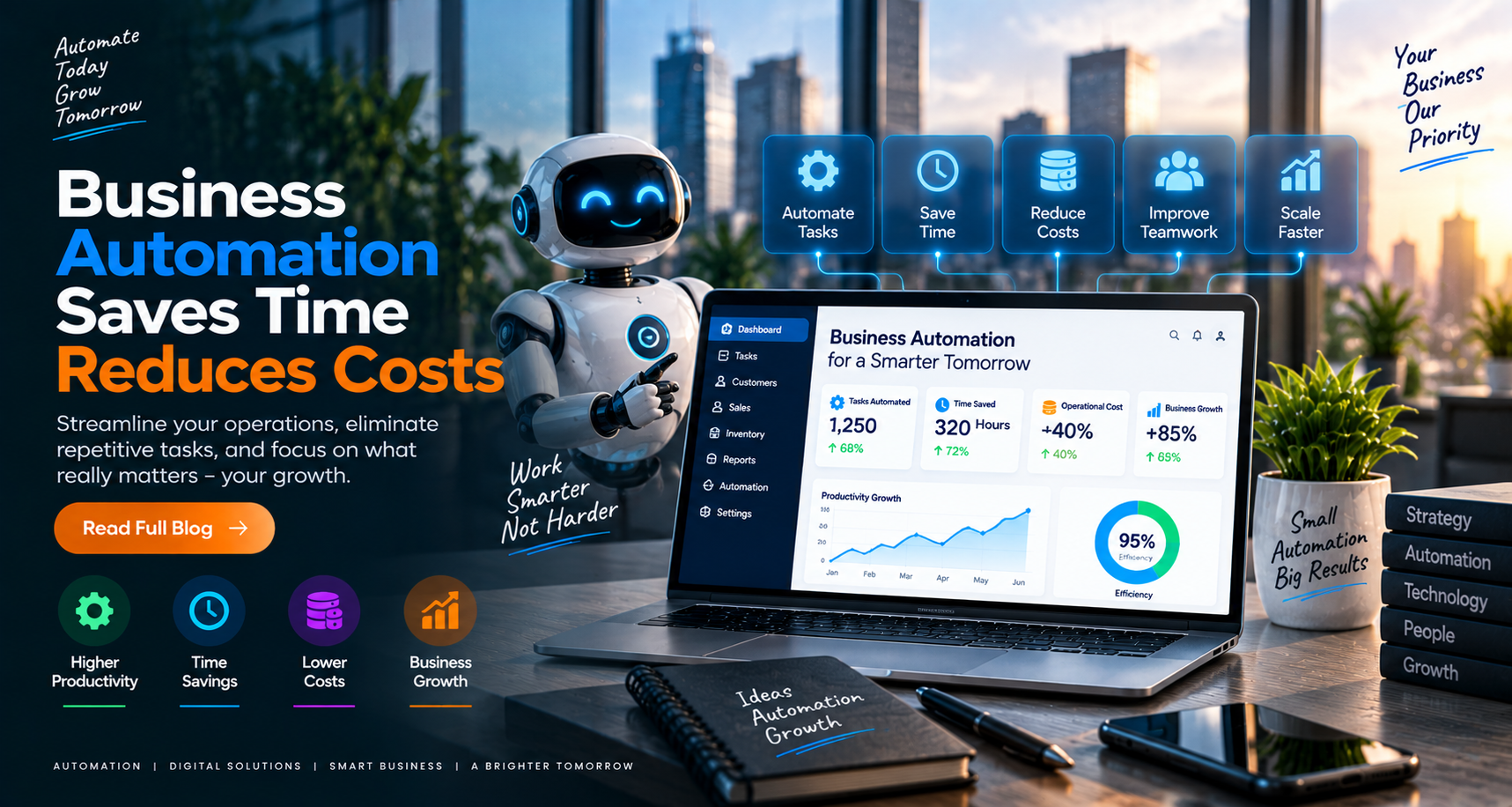
In a competitive business environment, time is one of the most valuable resources. Repetitive manual tasks, scattered information, and inefficient workflows can slow down productivity and increase operational costs. Business automation helps organizations simplify daily processes, reduce errors, and focus on activities that create real value.
By using the right digital tools, businesses can improve efficiency while delivering faster and more reliable services to customers.
1. Reduces Repetitive Manual Work
Many business activities involve repetitive tasks such as data entry, invoice preparation, report generation, email responses, and appointment scheduling. Automation can handle these tasks quickly and consistently, allowing employees to focus on more strategic responsibilities.
2. Improves Operational Efficiency
Automated workflows help businesses complete tasks in a structured and organized way. Processes such as approvals, order management, customer follow-ups, and employee requests can move smoothly between departments.
3. Minimizes Human Errors
Manual work can lead to mistakes in data entry, calculations, reporting, and communication. Automation reduces the possibility of common errors by following predefined rules and processes.
4. Saves Time and Resources
When routine tasks are automated, employees can complete more work in less time. This helps businesses use their human resources more effectively and reduce unnecessary operational expenses.
5. Enhances Customer Service
Automation allows businesses to respond to customer inquiries, send notifications, confirm bookings, and provide updates more quickly. Faster communication can improve customer satisfaction and build stronger relationships.
6. Improves Data Accuracy
Automated systems can collect, organize, and update information across different departments. This creates more consistent records and helps management access reliable business data.
7. Supports Better Decision-Making
Automation can generate real-time reports, performance summaries, sales updates, and operational insights. Managers can use this information to identify problems, measure progress, and make informed decisions.
8. Strengthens Business Scalability
As a business grows, the number of customers, transactions, employees, and daily activities also increases. Automated systems help organizations manage higher workloads without increasing manual effort at the same rate.
9. Improves Team Collaboration
Automation connects departments through shared workflows and notifications. Employees can easily track task progress, understand responsibilities, and avoid delays caused by poor communication.
10. Increases Business Competitiveness
Businesses that automate their operations can respond faster, reduce costs, and deliver more consistent services. These advantages help organizations remain competitive and adapt to changing market demands.
Conclusion
Business automation is not only about reducing manual work. It is about creating smarter workflows, improving productivity, reducing operational costs, and delivering better customer experiences. With the right automation strategy, businesses can save valuable time and prepare for sustainable growth.
Automate Your Business with One IT Digital
At One IT Digital, we develop customized automation solutions that simplify business processes, connect essential systems, and improve operational efficiency. From workflow automation to integrated business platforms, our digital solutions are designed to help your organization work smarter and grow faster.