

Managing a growing business requires more than hard work. Businesses need organized processes, accurate data, strong customer relationships, and efficient communication between departments. Without the right technology, managing these areas can become time-consuming and complicated.
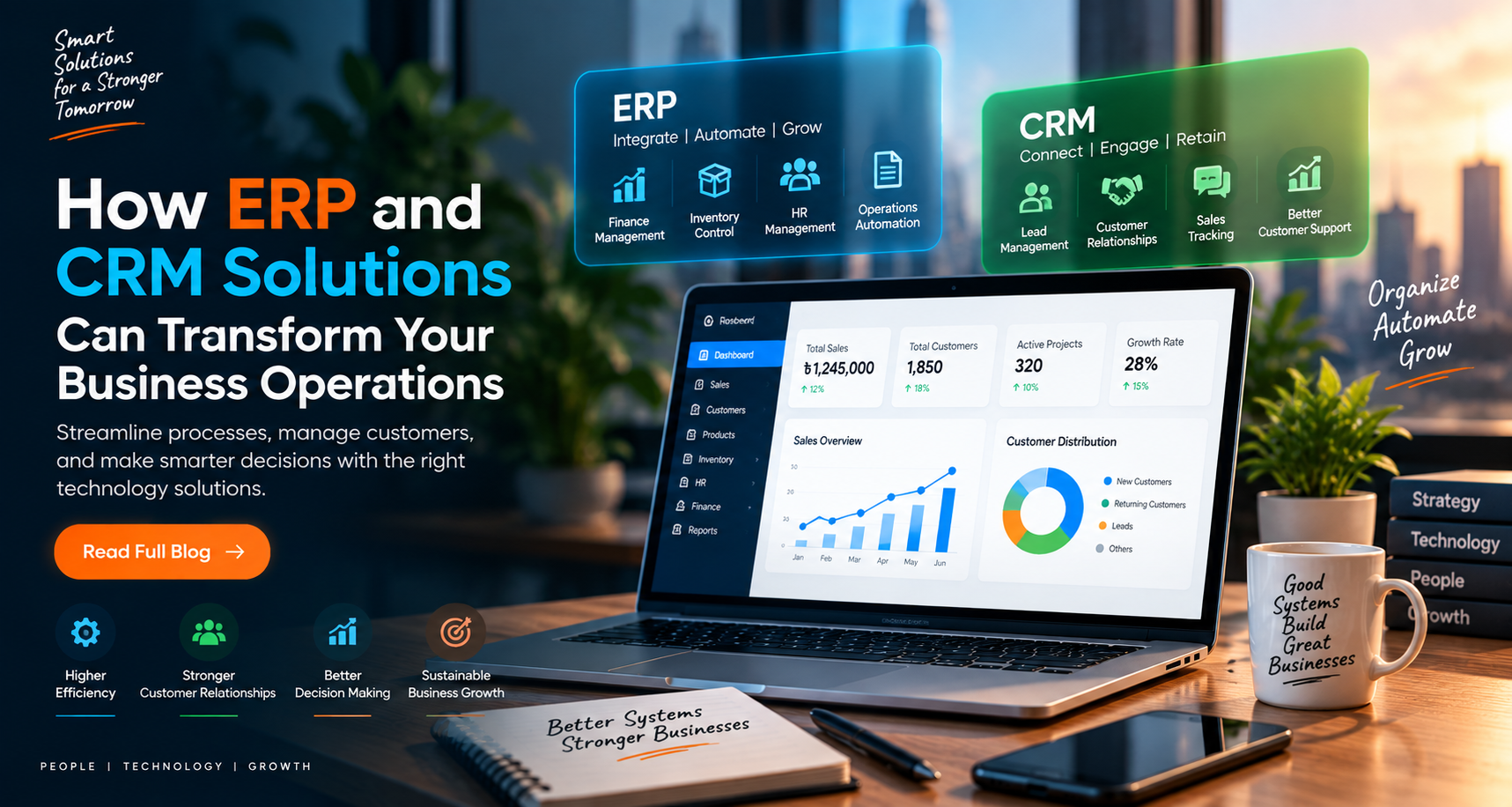
This is where Enterprise Resource Planning (ERP) and Customer Relationship Management (CRM) solutions can make a significant difference. These technologies help businesses organize operations, improve productivity, manage customer information, and make smarter decisions.
Whether you run a startup, a growing company, or an established enterprise, implementing the right ERP and CRM solutions can help create a more efficient and scalable business environment.
1. What Is ERP and How Does It Work?
Enterprise Resource Planning, commonly known as ERP, is a business management system that brings different organizational processes together in one platform.
Instead of managing finance, inventory, human resources, sales, and purchasing through separate systems, businesses can use an integrated ERP solution to organize and manage these activities more efficiently.
Common ERP functions include:
- Accounting and financial management.
- Inventory and stock management.
- Human resource management.
- Procurement and purchasing.
- Sales and order management.
- Business reporting and analytics.
By connecting different departments, ERP helps businesses reduce data duplication and improve visibility across their operations.
2. What Is CRM and Why Is It Important?
Customer Relationship Management, or CRM, is a system designed to help businesses manage interactions with existing and potential customers.
A CRM platform stores important customer information and helps sales and support teams track communication, follow up on leads, and build stronger relationships.
Important CRM features include:
- Customer contact management.
- Lead and sales pipeline tracking.
- Follow-up reminders.
- Customer communication history.
- Sales performance reports.
- Customer support management.
A well-organized CRM system enables businesses to understand their customers better and deliver more personalized experiences.
3. Improve Business Efficiency Through Automation
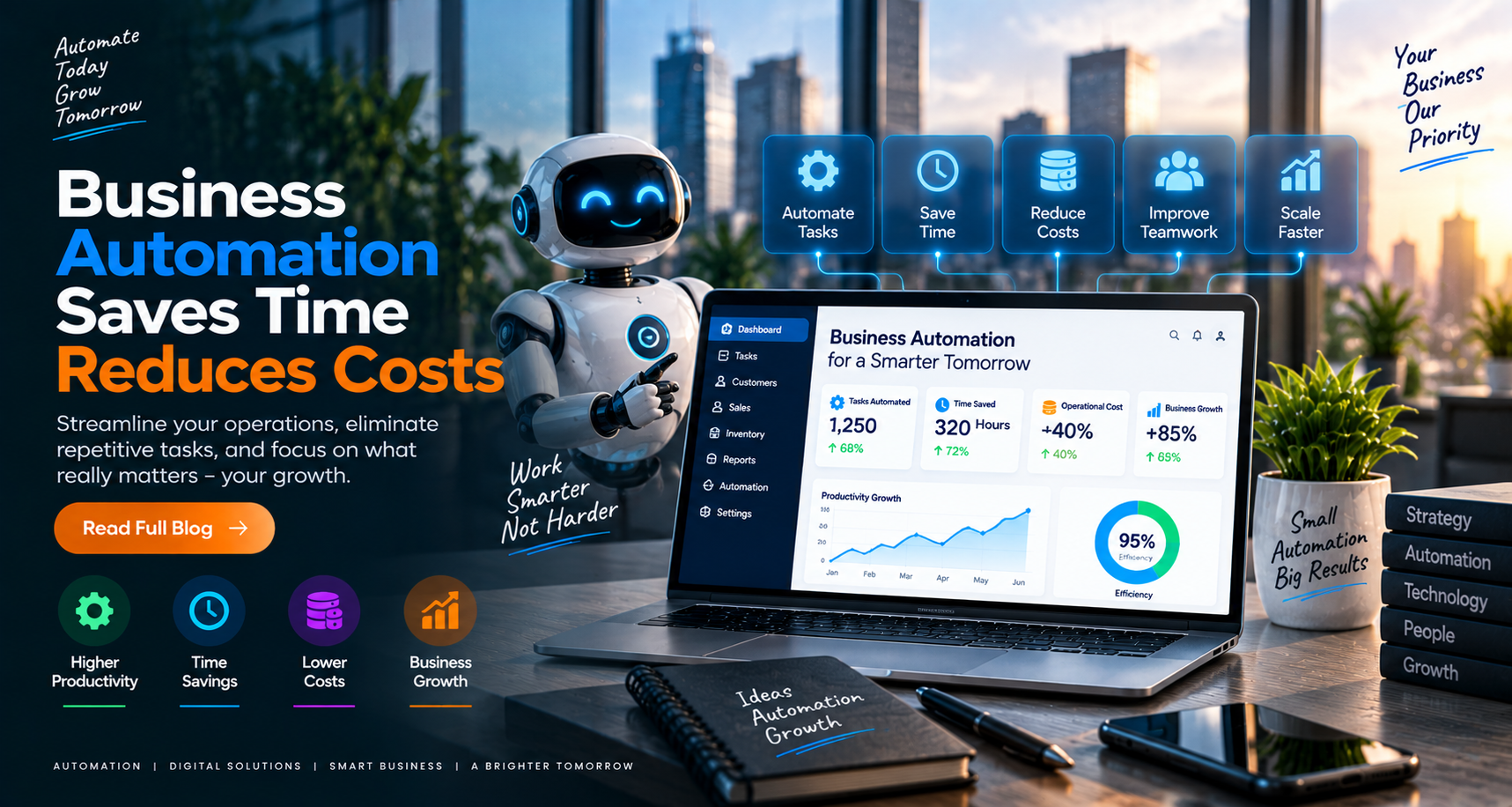
Manual business processes often require considerable time and effort. Repetitive tasks such as preparing reports, updating customer records, managing invoices, and tracking orders can slow down daily operations.
ERP and CRM solutions can help automate many routine activities.
For example:
- Automatic invoice generation.
- Sales lead assignment.
- Inventory alerts.
- Customer follow-up reminders.
- Automated reports.
- Workflow notifications.
Automation allows employees to spend less time on repetitive administrative tasks and more time on activities that contribute to business growth.
4. Centralize Your Business Data
One of the biggest challenges businesses face is managing information across multiple platforms. When different departments maintain separate records, data inconsistencies and communication gaps can occur.
An integrated ERP or CRM system provides a more centralized approach to business information.
With centralized data, businesses can:
- Access important information more easily.
- Reduce duplicate records.
- Improve communication between teams.
- Track business performance.
- Make better-informed decisions.
Having reliable and accessible data is essential for maintaining efficient business operations.
5. Strengthen Customer Relationships
Customer satisfaction is an important factor in long-term business success. Customers expect quick responses, accurate information, and consistent service.
A CRM system helps businesses keep track of customer interactions and understand their needs.
Businesses can use CRM tools to:
- Respond to inquiries efficiently.
- Track customer preferences.
- Manage sales opportunities.
- Follow up with potential customers.
- Provide better customer support.
- Build long-term customer relationships.
When customers receive timely and relevant communication, businesses can create a more positive customer experience.
6. Make Smarter Business Decisions
Business decisions are more effective when they are supported by accurate information. ERP and CRM platforms can provide valuable insights into sales performance, customer behavior, inventory levels, and operational efficiency.
Business leaders can use reports and dashboards to identify trends and evaluate performance.
For example, a business may use its data to understand:
- Which products generate the most sales.
- Which customers require additional attention.
- Which departments need improved efficiency.
- Where operational costs can be reduced.
- Which sales opportunities are most promising.
Data-driven insights help businesses plan more effectively and respond to changing market conditions.
7. Support Business Growth and Scalability
As a business expands, its operational requirements become more complex. Managing more customers, employees, products, and transactions can be difficult without a reliable technology infrastructure.
ERP and CRM solutions can support business growth by providing organized systems that adapt to changing requirements.
A scalable business solution can help you:
- Add new users and departments.
- Manage increasing customer information.
- Integrate additional business tools.
- Improve internal workflows.
- Monitor performance across multiple operations.
Choosing a solution that fits your current needs while allowing future expansion can be a valuable investment.
8. Improve Collaboration Between Departments
Effective collaboration is essential for a successful business. When sales, finance, customer support, and management teams have access to relevant information, communication becomes easier.
ERP and CRM systems can help departments work together more efficiently.
For example, when a sales team records a new order, the relevant information can be shared with other departments according to the system’s integrations and workflow setup. This can reduce communication gaps and help teams coordinate their responsibilities.
Why Choose One IT Digital for ERP and CRM Solutions?
At One IT Digital, we understand that every business has unique operational requirements. Our technology solutions are designed to help businesses improve efficiency, organize information, and create better digital workflows.
We can help businesses explore solutions such as:
- Customized ERP development.
- CRM software development.
- Business process automation.
- Sales and customer management systems.
- Inventory and financial management solutions.
- Third-party software integrations.
- Customized dashboards and reporting systems.
Our goal is to help businesses adopt technology that supports productivity, better management, and long-term growth.
Final Thoughts
ERP and CRM solutions are powerful tools for businesses looking to improve operational efficiency and customer relationships. From automating routine tasks and organizing business data to improving collaboration and supporting growth, these systems can transform the way a business operates.
The right technology solution can help your team work smarter, serve customers better, and prepare your business for future opportunities.
Ready to improve your business operations with smart technology? Contact One IT Digital today to explore customized ERP and CRM solutions designed around your business needs.